.png)

February 5, 2026
Capital Planning: Replacing vs. Extending Roof Life

For many building owners and facility managers, roofing decisions aren’t just about leaks, they’re about timing, capital planning, and risk.
The question we hear most often isn’t “Can you fix the roof?”
It’s “Do we need to replace it now, or can we responsibly extend its life?”
That distinction matters. A lot.
Why Roofing Decisions Are Capital Decisions
A full roof replacement is a major capital expense. It requires long-term budgeting, approvals, and often disrupts other planned improvements. Once you replace a roof, that capital is spent—and there’s no getting it back.
Roof renewal and restoration, when done correctly, shifts the conversation. Instead of asking “How soon do we replace?” the better question becomes:
“How do we manage this roof as an asset?”
That mindset change alone can save hundreds of thousands of dollars over the life of a building.
Most Roofs Don’t Fail All at Once
Here’s something many owners are surprised to learn:
Most commercial roofs don’t fail because the entire system is worn out.
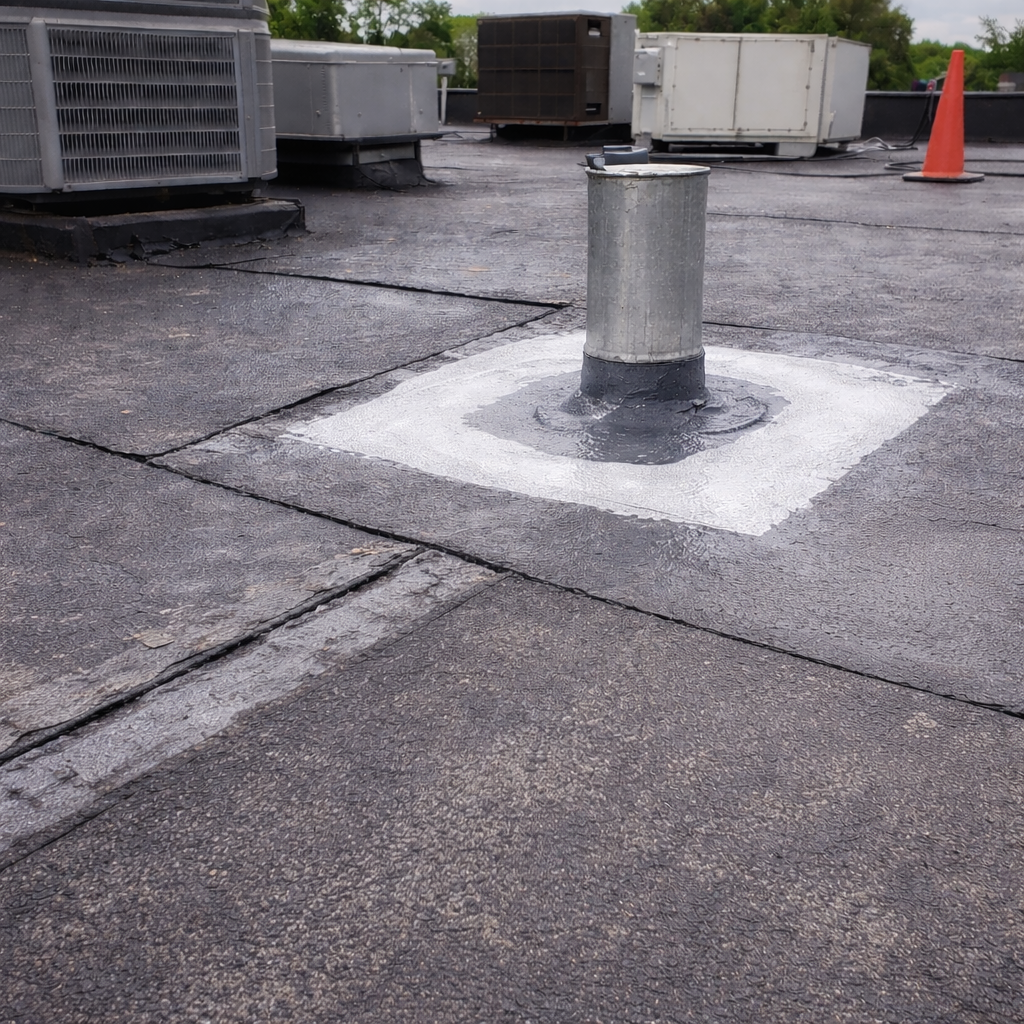
They fail because of seams, penetrations, flashing details, and exposure.
In many cases, the underlying roof still has structural value. What’s breaking down are the vulnerable point, the areas that take the most abuse from weather, temperature swings, and time.
When that’s the case, immediate replacement isn’t always the smartest move.
Replacement: When It Makes Sense
There are times when replacement is the right call. We’ll be direct about that.
Replacement typically makes sense when:
- The roof has widespread saturation
- The substrate has failed
- There is significant structural damage
- Multiple systems have been layered without proper detailing
- Long-term performance can’t be reasonably restored
In those situations, renewal isn’t responsible, and we won’t recommend it.
But those scenarios are not as common as many owners are led to believe.
Extending Roof Life: A Strategic Alternative
When a roof is still structurally sound, renewal becomes a powerful planning tool.
A properly designed fluid-applied roofing system:
- Creates a seamless, fully waterproof membrane
- Reinforces seams, penetrations, and transitions
- Eliminates common leak points
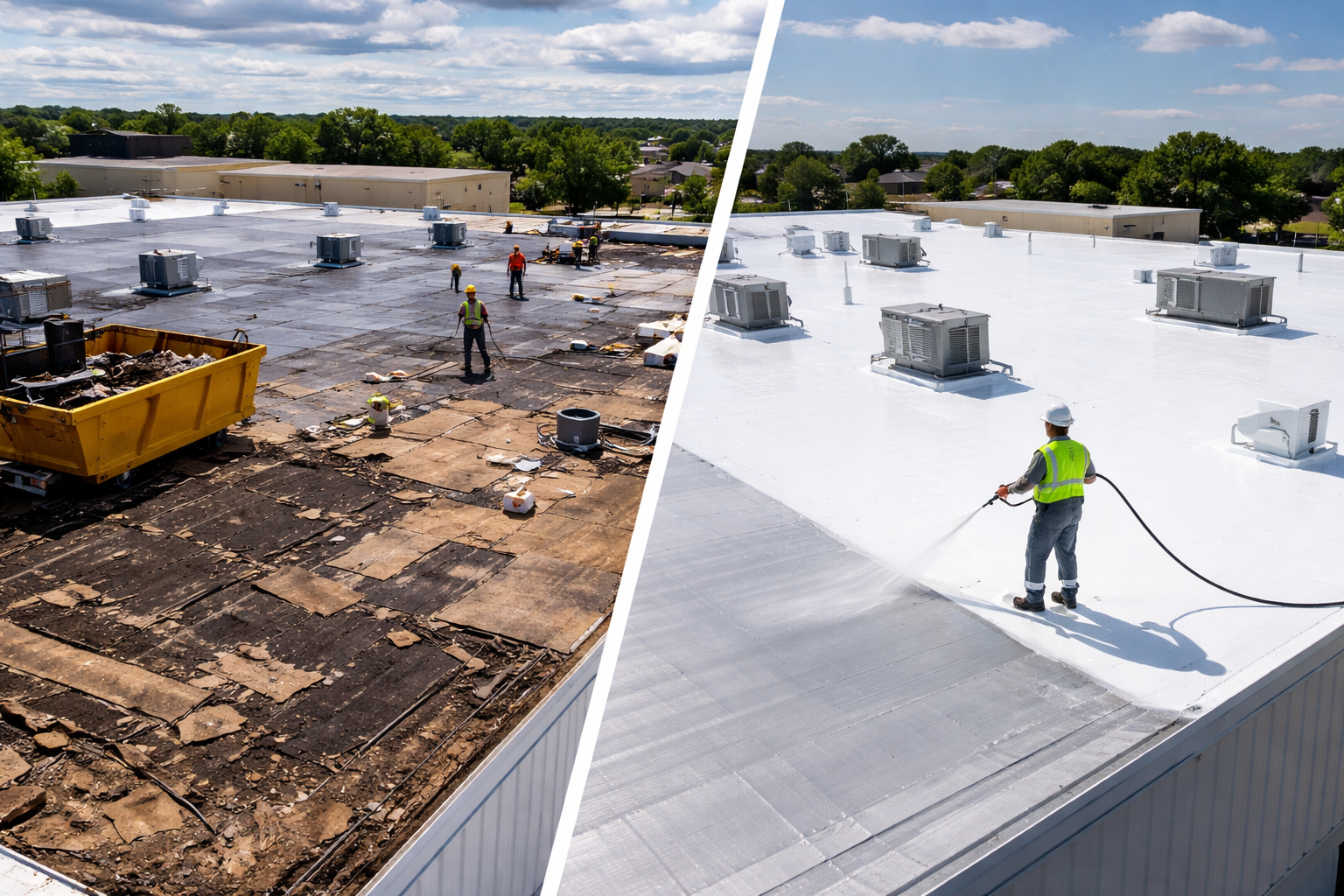
- Extends roof life without tear-off
- Costs significantly less than replacement
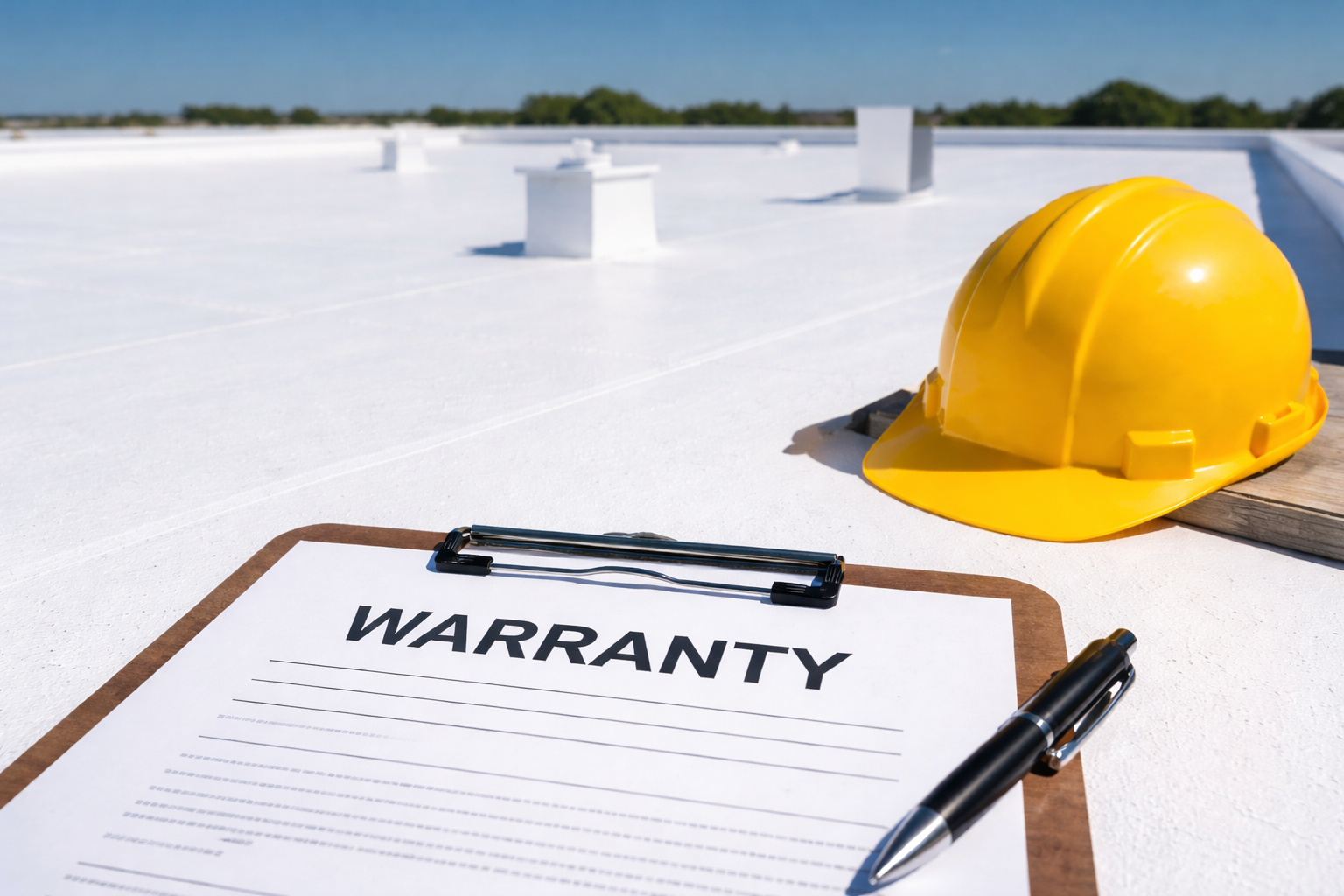
In many cases, renewal can be up to 40% less expensive than replacement, while still delivering long-term performance backed by a manufacturer-supported warranty.
The Capital Planning Advantage
From a planning standpoint, roof renewal offers several advantages:
1. Deferred Capital Spend
Instead of consuming a large capital budget today, renewal allows owners to defer replacement while still protecting the building.
2. Predictable Lifecycle Management
With a renewable roofing system, you’re not locked into a “rip and replace” cycle. At the end of the warranty term, the system can often be renewed again extending service life further at a fraction of the cost.
3. Reduced Risk
Emergency leaks, winter failures, and reactive repairs are expensive and disruptive. Proactive renewal reduces those risks and stabilizes maintenance costs.
4. Budget Flexibility
For municipalities and large portfolios, renewal can often be planned as part of maintenance or phased capital improvements rather than a single massive expenditure.
Why Assessment Comes First
Not every roof qualifies for renewal, and that’s by design.
Before recommending any system, we start with a detailed assessment:
- Roof condition and substrate
- Moisture presence
- Seams, penetrations, and details
- Drainage and slope
- Exposure and building use
Only after that evaluation do we determine whether extending roof life is appropriate or if replacement truly makes more sense.
Assessment before recommendation protects the owner, not the contractor.
Long-Term Thinking Beats Short-Term Fixes
The mistake we see most often is trying to “buy time” with patchwork repairs. That approach usually leads to:
- Repeated emergency calls
- Escalating repair costs
- Lost confidence in the roof
- Eventually, an unplanned replacement
Renewal isn’t about buying time. It’s about resetting the lifecycle of the roof in a controlled, intentional way.
Making the Smarter Roofing Decision
If you’re responsible for a building, or multiple buildings, the goal isn’t to replace roofs as fast as possible. The goal is to:
- Protect the asset
- Control long-term costs
- Reduce operational disruption
- Make defensible, data-backed decisions
Sometimes replacement is the right answer. Often, it isn’t.
The key is knowing the difference.
Final Thought
If your roof still has structure left, replacement shouldn’t be the default decision. With the right assessment and the right system, extending roof life can be the most responsible move you make for your building and your budget.