.png)

February 5, 2026
Roof Replacement vs Roof Restoration in Western New York

How Building Owners and Facility Managers Make the Right Decision
If you own or manage a commercial, industrial, or municipal building in Western New York, this question eventually comes up:
Do we replace the roof now, or can we responsibly extend its life?
It is one of the most expensive and consequential building decisions you will make. Unfortunately, it is also one of the most misunderstood. Replacement is often presented as the default option, even when the existing roof still has usable life left.
The right answer depends on condition, not age. It depends on climate, not assumptions. And it depends on understanding the difference between replacement and restoration as long term strategies, not just short term fixes.
Why This Decision Matters More in Western New York
Western New York roofs live in a tougher environment than most parts of the country.
Freeze and thaw cycles stress seams and flashings. Snow loads sit for months. Temperature swings cause expansion and contraction that exploit weak points in a roof system. Many roofs fail here earlier than expected, not because the entire system is worn out, but because details fail first.
This climate reality makes owners more vulnerable to premature replacement decisions. It also makes properly designed roof restoration systems especially effective when the roof structure is still sound.
What Roof Replacement Actually Involves
Roof replacement has its place. When a roof has widespread saturation, structural failure, or incompatible layered systems, replacement is often the only responsible option.
Replacement typically includes:
- Full tear off and disposal
- Exposure of the building during construction
- Significant operational disruption
- Large capital expenditure
- A new lifecycle clock starting at zero
Replacement is not wrong. It is just expensive, disruptive, and irreversible once completed.
Understanding when replacement is necessary is critical. Equally important is recognizing when it is not.
What Roof Restoration Really Is and What It Is Not
Roof restoration is often misunderstood.
A true restoration system is not a coating applied to a failing roof. It is a system based approach designed around assessment, preparation, reinforcement, and performance.
A properly designed fluid applied membrane system:
- Starts with a qualified existing roof
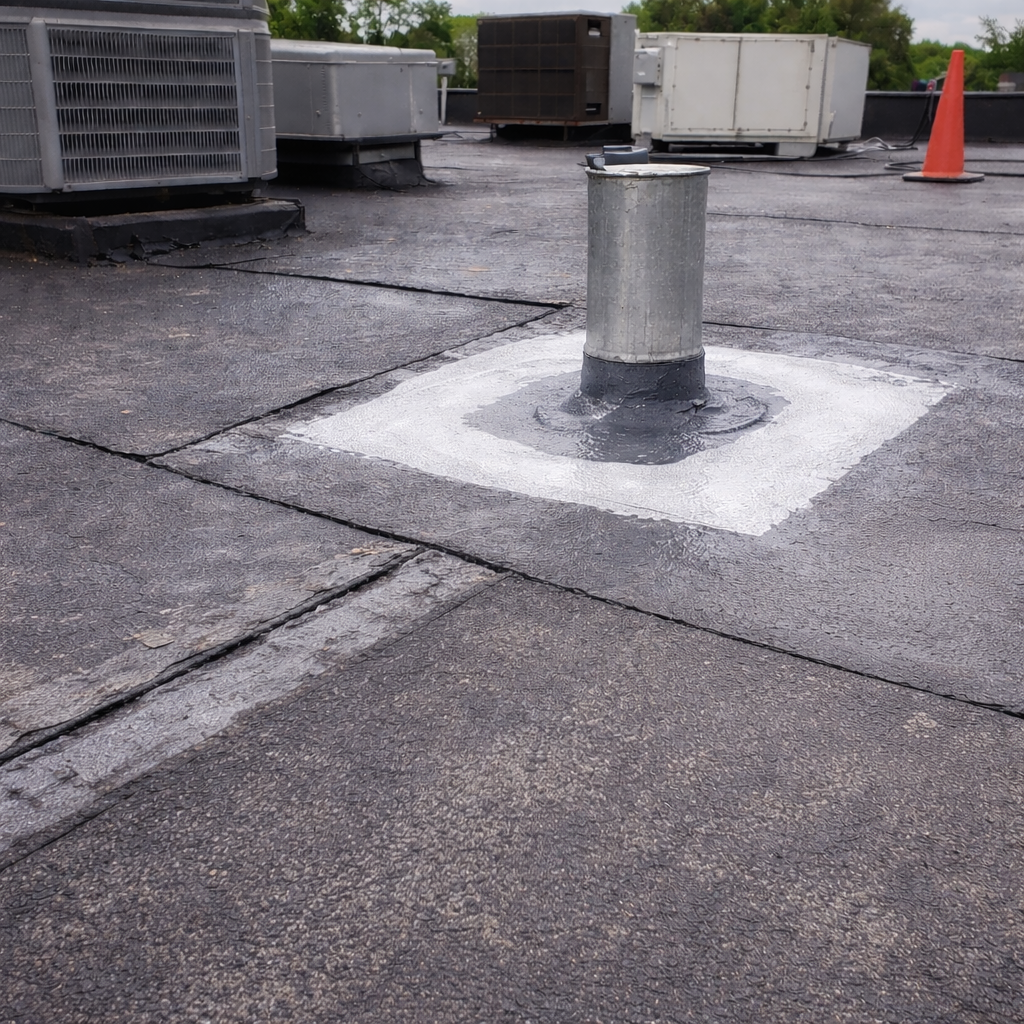
- Reinforces seams, penetrations, drains, and transitions
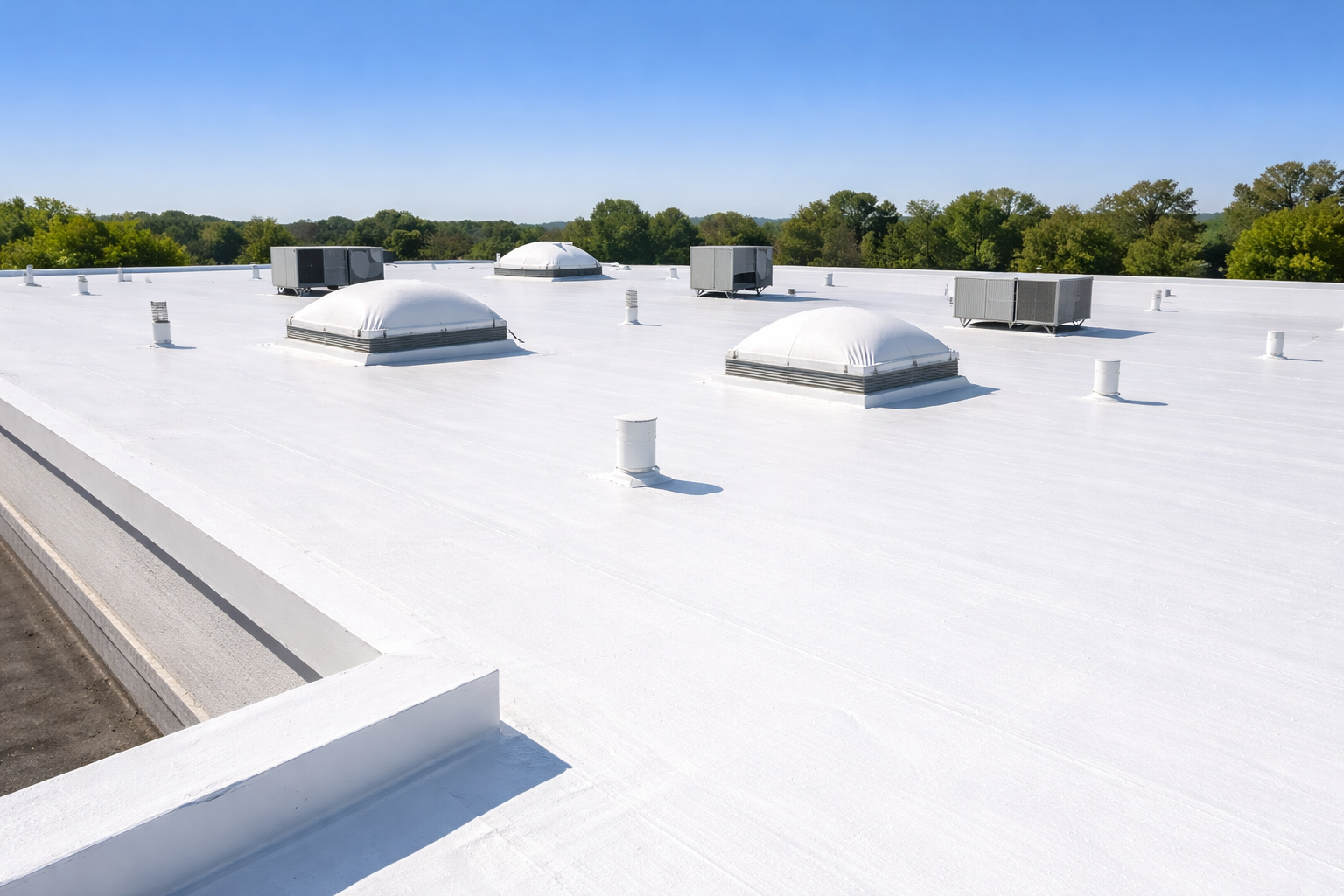
- Creates a seamless waterproof membrane
- Eliminates the most common failure points
- Extends service life without tear off
Restoration only works when the underlying roof still has structural value. That is why assessment comes before recommendation. What are the signs your commercial roof can be renewed instead of replaced?
Signs Your Commercial Roof Can Be Renewed Instead of Replaced
Cost Comparison Replacement vs Restoration
This is where many decisions are made.
Replacement costs are driven by tear off, disposal, labor, and downtime. Restoration eliminates most of those variables by reusing the existing roof structure.
In many Western New York projects, restoration is up to 40 percent less expensive than full replacement. That savings often allows owners to address roofing proactively instead of deferring action due to budget constraints.
More importantly, restoration changes how roofing fits into capital planning.
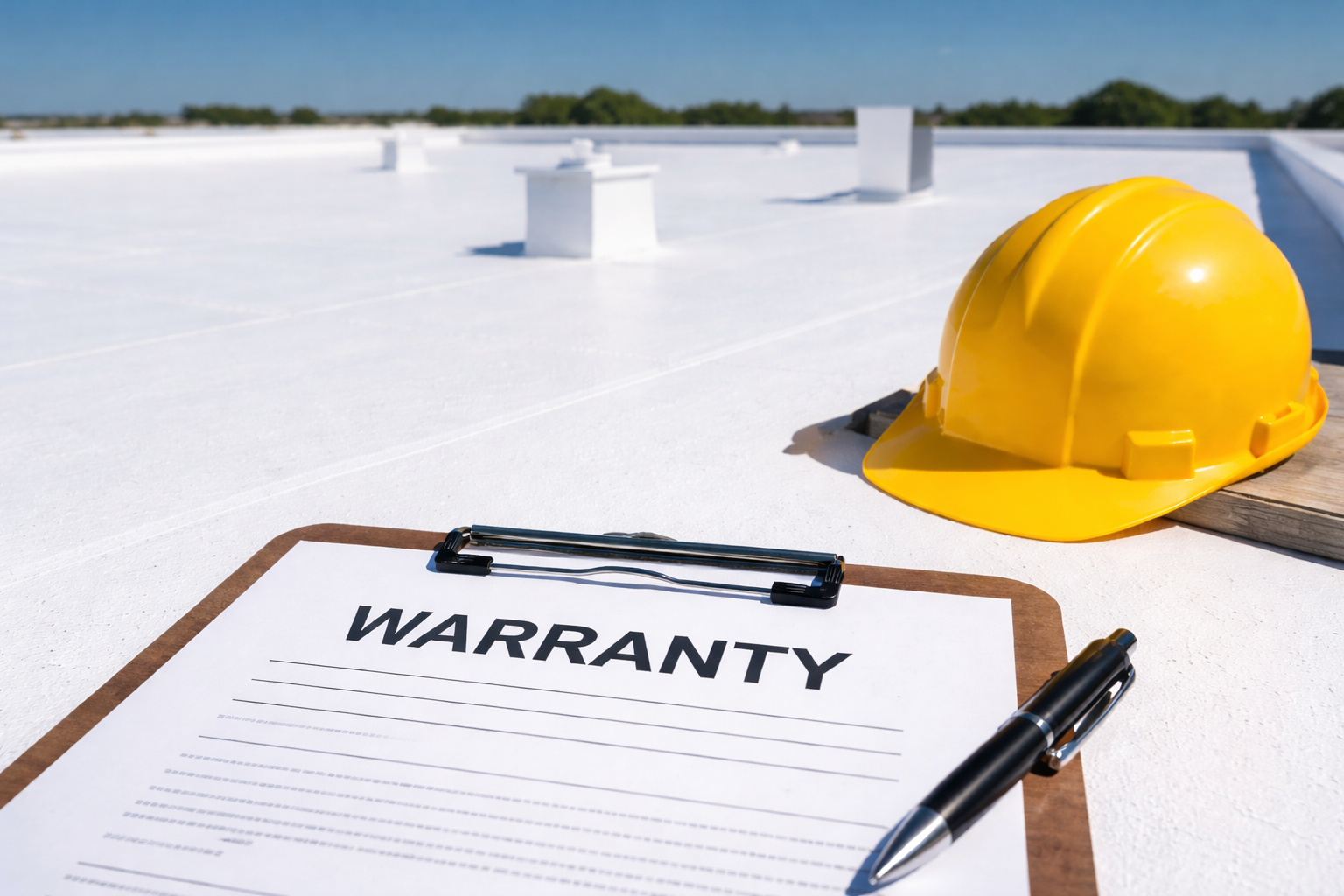
Warranty Differences That Matter to Owners
Not all warranties protect the owner the same way.
Many replacement warranties are prorated, meaning coverage declines as the roof ages. Labor coverage is often limited. Renewability is rarely discussed.
Properly specified restoration systems can include:
- Manufacturer backed labor and material warranties
- Non prorated coverage
- Terms up to 15 years
- A defined path to renewal at the end of the term
Renewability is critical. It allows owners to extend protection instead of starting over with another replacement cycle.
What a 15 Year Non Prorated Roof Warranty Actually Covers
Performance in Cold and Variable Climates
In Western New York, seams and details fail long before membranes do.
Fluid applied systems perform well here because they:
- Eliminate seams as failure points
- Remain flexible during temperature swings
- Adapt to expansion and contraction
- Reinforce vulnerable transitions
This makes them especially effective on large flat roofs, industrial facilities, warehouses, and municipal buildings where disruption is costly and downtime is unacceptable.
Operational Impact During Installation
One of the most overlooked differences between replacement and restoration is what happens during the work.
Replacement often requires shutdowns, staging, and exposure risks. Restoration is typically performed with minimal disruption because the existing roof remains in place.
For industrial and municipal facilities, this can be the deciding factor.
What to Expect During a Roof Restoration Project
When Replacement Is the Right Choice
Being clear about this builds trust.
Replacement is usually the right option when:
- The roof is structurally compromised
- Saturation is widespread
- The substrate has failed
- Multiple incompatible systems are present
- Restoration cannot deliver long term performance
A responsible contractor will tell you when restoration is not appropriate.
How to Make the Right Decision for Your Building
The right decision starts with assessment, not assumptions.
A proper evaluation looks at:
- Roof condition and substrate
- Moisture presence
- Seams, penetrations, and transitions
- Drainage and slope
- Building use and operational risk
From there, owners can weigh cost, risk, warranty, and lifecycle impact instead of reacting to leaks or pressure to replace.
Final Thoughts on Roofing Strategy
Roof replacement is sometimes necessary. Roof restoration is often smarter.
The difference is understanding the roof as an asset instead of a liability. In Western New York, where climate accelerates failure but does not always eliminate structural value, restoration can be a powerful long term strategy.
If your roof still has structure left, replacement should not be the default decision.
Understanding your options is the first step.