.png)

February 5, 2026
Signs Your Commercial Roof Can Be Renewed Instead of Replaced

When a commercial roof starts leaking or showing wear, replacement is often presented as the default solution. In reality, many roofs that are labeled “end of life” still have usable structure left.
The key is knowing what to look for.
If you manage or own a commercial, industrial, or municipal building in Western New York, these are the signs that your roof may be a strong candidate for renewal rather than full replacement.
Age Alone Is Not the Deciding Factor
One of the biggest misconceptions in commercial roofing is that age determines everything.
A 20-year-old roof can sometimes be a better renewal candidate than a 12-year-old roof that was poorly installed or maintained. What matters most is condition, not the date on a warranty.
Roofs don’t fail all at once. They fail at specific points.
The Roof Is Structurally Sound
Renewal starts with structure.
If the roof deck and underlying system are intact and stable, restoration is often a responsible option. Structural failure, widespread deck damage, or compromised framing usually point toward replacement. Without those issues, renewal should be evaluated seriously.
A proper assessment will confirm whether the roof still has a solid foundation to build on.
Leaks Are Isolated, Not Systemic
Most renewal candidates experience leaks at predictable locations:
- Seams and laps
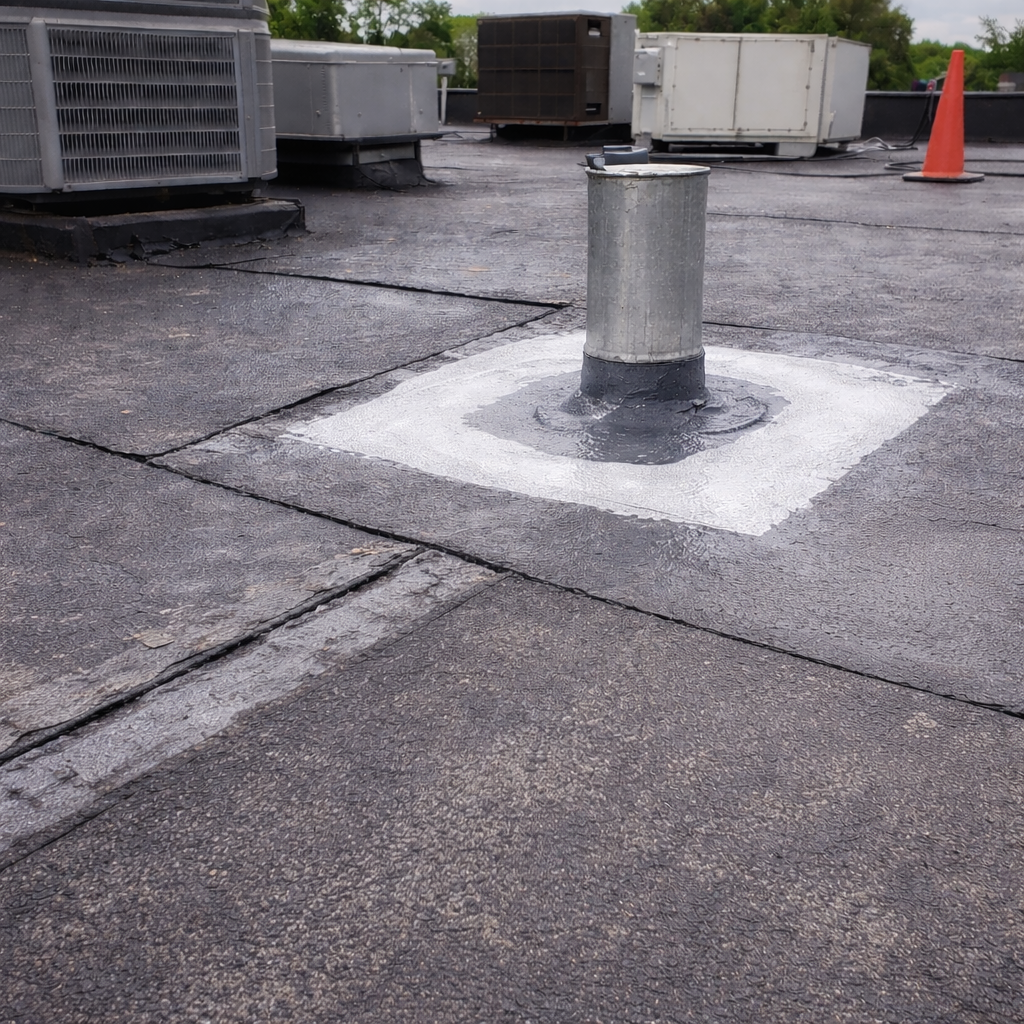
- Penetrations and curbs
- Flashings and transitions
- Drains and low areas
These are detail failures, not full system failures.
If leaks are localized rather than widespread across the field of the roof, that is a strong indicator the roof can be renewed.
Moisture Is Limited and Contained
Moisture intrusion does not automatically disqualify a roof from renewal.
What matters is how far it has spread.
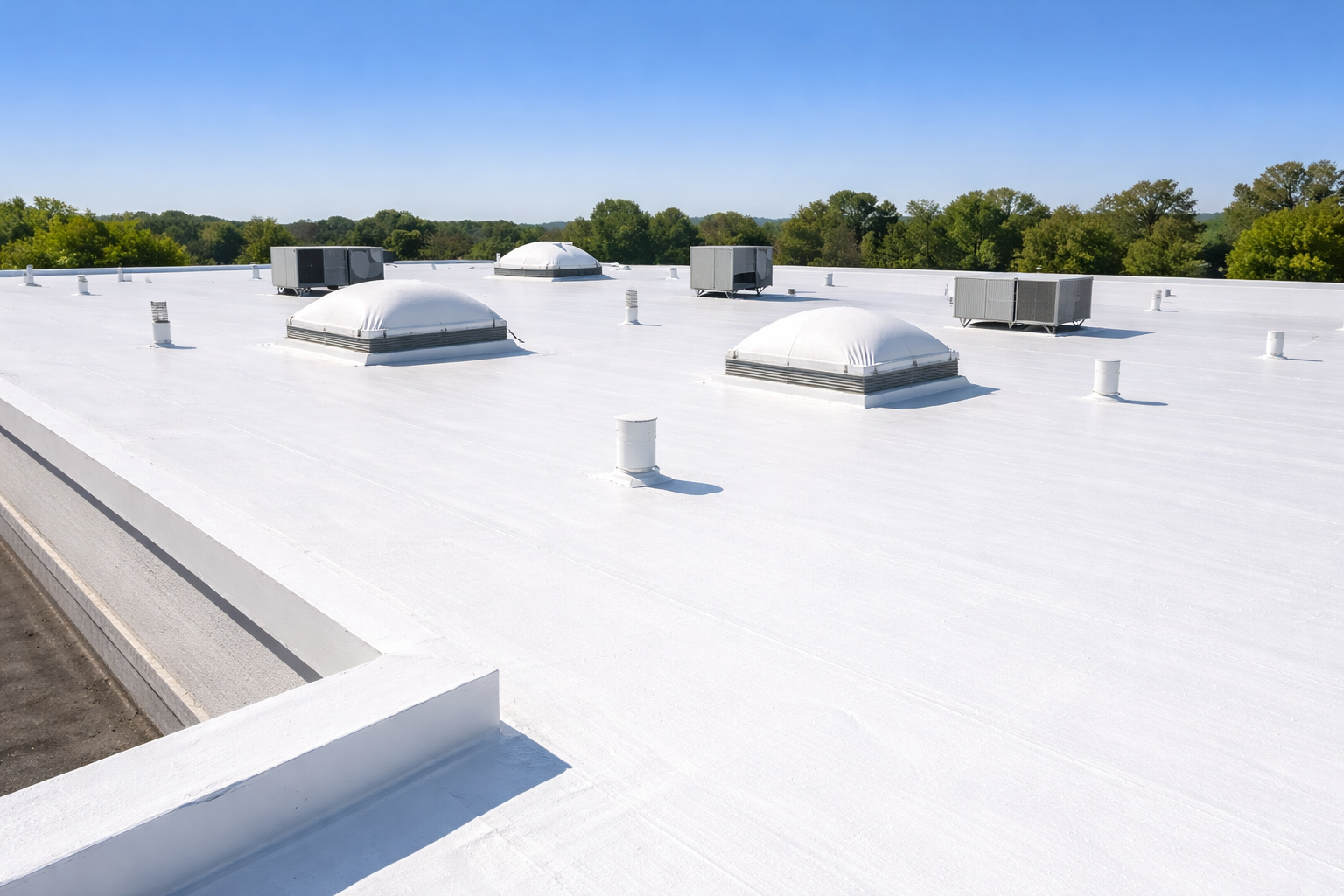
If moisture is isolated and not present throughout the system, targeted repairs combined with a fluid-applied membrane can often address the problem without tear-off. Widespread saturation across large areas is a different conversation and may require replacement.
This is why moisture assessment is critical before any recommendation is made.
The Roof Is Failing at Seams, Not the Membrane
In Western New York, freeze-thaw cycles exploit seams long before membranes wear out.
If inspections show that the membrane itself is still flexible and intact, but seams are separating or details are failing, renewal is often the smarter solution. Fluid-applied systems eliminate seams entirely, removing one of the most common failure points.
How Freeze Thaw Cycles Impact Commercial Roof Systems
The Building Cannot Tolerate Major Disruption
Replacement is disruptive by nature. Tear-off, exposure, staging, and longer timelines all create risk, especially for:
- Manufacturing facilities
- Warehouses
- Schools
- Municipal buildings
- Occupied commercial spaces
If operational continuity matters, renewal offers a way to protect the roof with minimal disruption while maintaining building use.
Budget Timing Is a Concern
Many roofing decisions are driven by capital cycles, not roof condition.
If replacement is financially possible but poorly timed, renewal can bridge the gap responsibly. Extending roof life allows owners to plan replacement strategically instead of reacting to emergencies.
In many cases, renewal costs significantly less than replacement, freeing up capital for other priorities.
Capital Planning Replacing vs Extending Roof Life
The Roof Has Not Been Layered Excessively
Roofs with multiple incompatible systems layered over time can be difficult or impossible to renew properly.
However, roofs with a manageable number of layers and a compatible substrate are often excellent candidates. Part of the assessment process is determining whether the existing system can accept a restoration membrane responsibly.
A Renewable Warranty Is Available
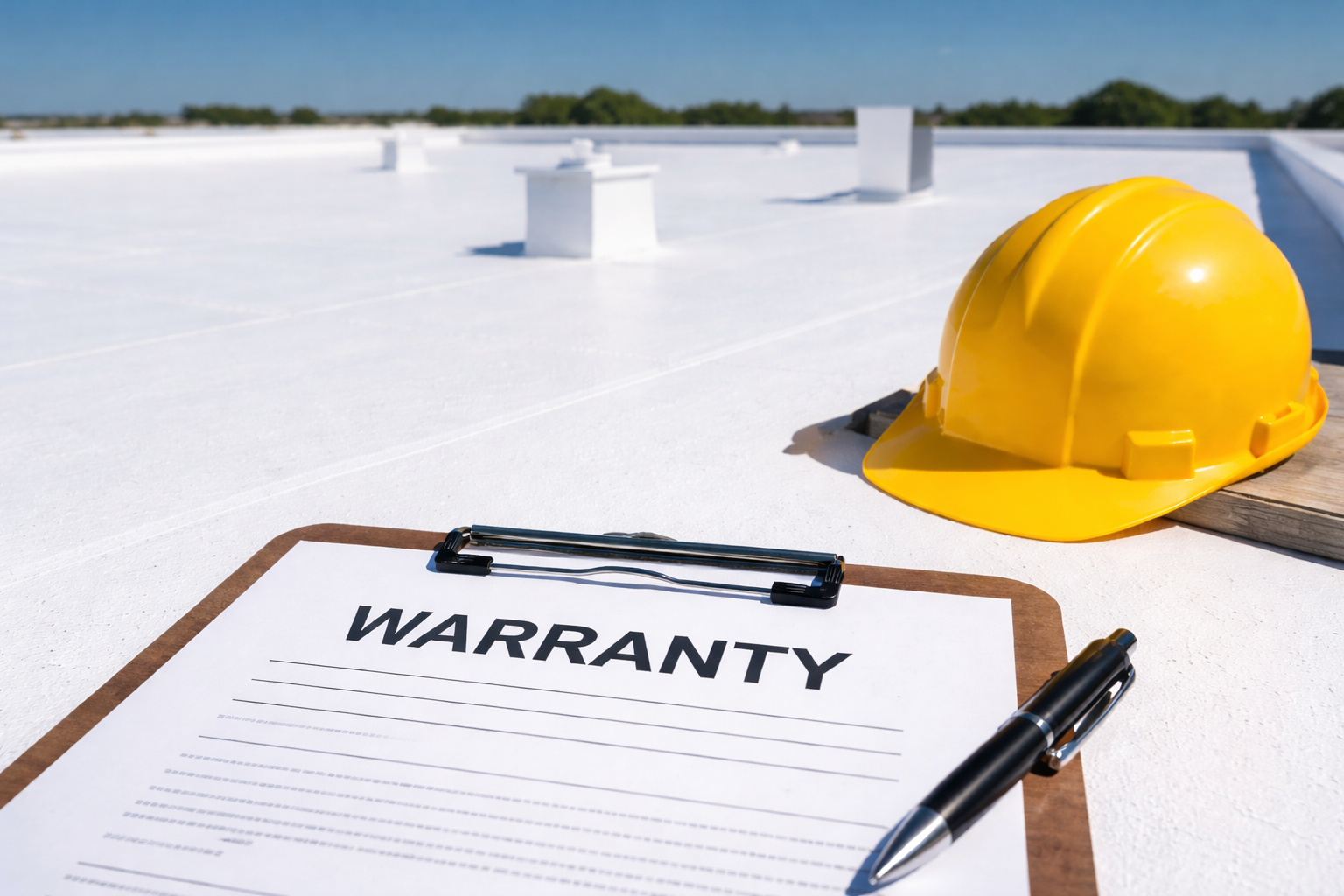
One of the strongest indicators that renewal makes sense is the availability of a manufacturer-backed, non-prorated warranty with a renewal path.
Unlike traditional roofs that head toward inevitable replacement, renewable systems allow owners to extend protection at the end of the term instead of starting over.
What a 15 Year Non Prorated Roof Warranty Actually Covers
Replacement Has Been Recommended Without an Assessment
This is an important red flag.
If replacement is recommended without a thorough inspection, moisture evaluation, and system review, you may not be getting the full picture. Responsible contractors assess first and recommend second.
Renewal is not always the right answer, but it should always be considered when conditions allow.
When Replacement Is the Right Call
Renewal is not appropriate when:
- Structural integrity is compromised
- Saturation is widespread
- The substrate has failed
- The roof system is incompatible with restoration
Knowing when renewal does not make sense is just as important as knowing when it does.
The Smarter First Step
The question is not whether your roof is old.
The real question is whether your roof still has structure left to protect.
When that answer is yes, renewal can extend service life, reduce disruption, and preserve capital. When the answer is no, replacement becomes the responsible path forward.
The only way to know is through proper assessment.