.png)

February 5, 2026
What to Expect During a Roof Restoration Project

When a commercial roof reaches a breaking point, most owners are told there is only one option: tear it off and replace it.
In reality, many roofs qualify for restoration, and the experience of those two paths could not be more different. Understanding what each process involves helps owners and facility managers choose the solution that fits their building, operations, and long-term plan.
How Traditional Tear-Off and Replacement Works
A tear-off and replacement project starts by removing the existing roof system down to the deck. This approach resets the roof entirely, but it comes with significant impacts.
During a replacement project, owners should expect:
- Full removal and disposal of the existing roof
- Exposure of the building during construction
- Large dumpsters and debris staging
- Higher noise levels and longer timelines
- Greater weather risk during open roof conditions
- Significant disruption to daily operations
Replacement is often necessary when the roof structure has failed or saturation is widespread. In those cases, removal is unavoidable and appropriate.
However, replacement is also frequently recommended by default, even when the existing roof still has structural value.
How Roof Restoration Is Different From the Start
Roof restoration takes a fundamentally different approach. Instead of removing the roof, the existing system becomes the foundation for renewal.
The process begins with a detailed evaluation to confirm the roof qualifies for restoration. This assessment focuses on structure, moisture, seams, penetrations, and drainage. If the roof does not qualify, restoration should not be recommended.
When the roof is a candidate, restoration allows work to proceed without exposing the building or removing the existing system.
Roof Replacement vs Roof Restoration in Western New York
Preparation: Removal vs Reinforcement
One of the biggest differences between replacement and restoration is how preparation is handled.
With replacement, preparation means demolition. Materials are removed, hauled away, and replaced with new components.
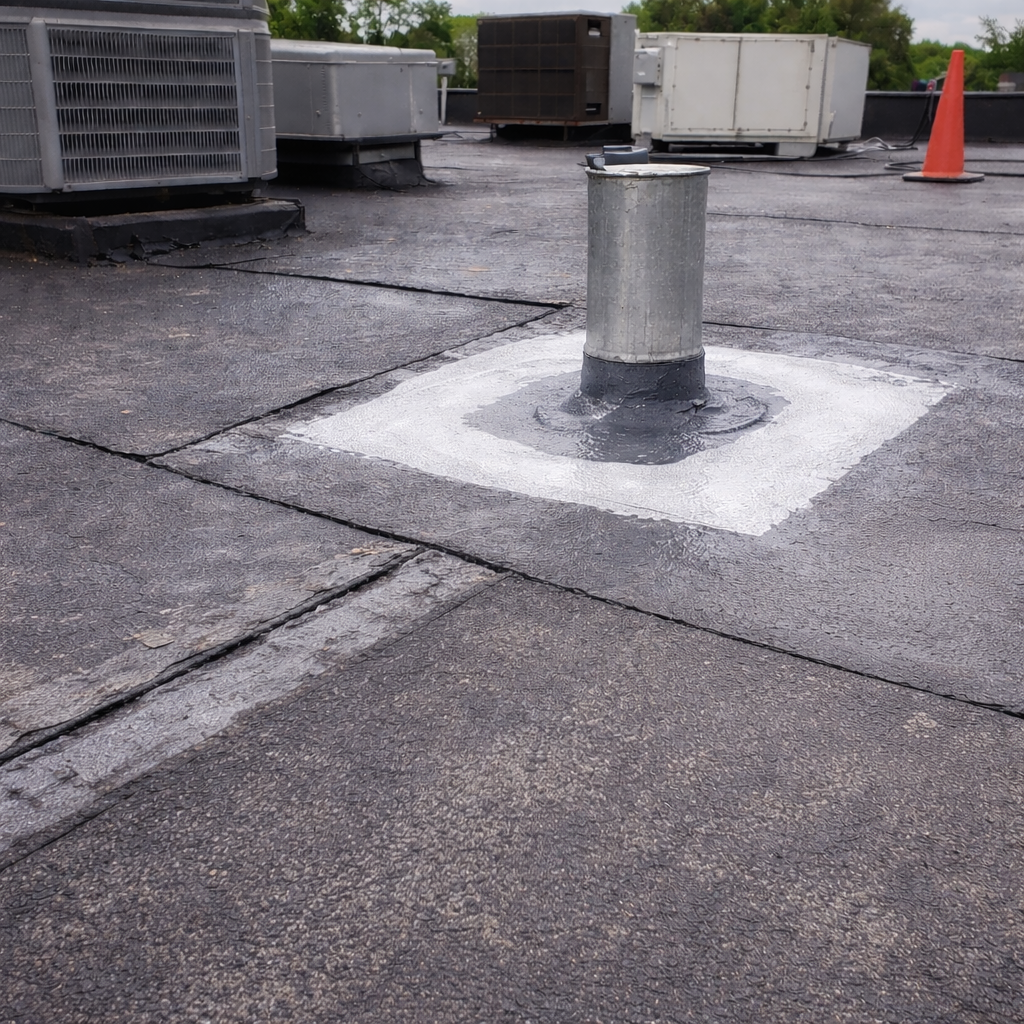
With restoration, preparation means reinforcement. The roof is cleaned, repaired, and stabilized. Vulnerable areas like seams, penetrations, drains, and transitions are addressed directly before the new system is applied.
This step is critical because most commercial roofs fail at details, not across the entire surface.
Signs Your Commercial Roof Can Be Renewed Instead of Replaced
Installation: Exposure vs Continuity
During replacement, the building is exposed at various stages. Even with careful sequencing, there is increased risk from weather, especially in Western New York.
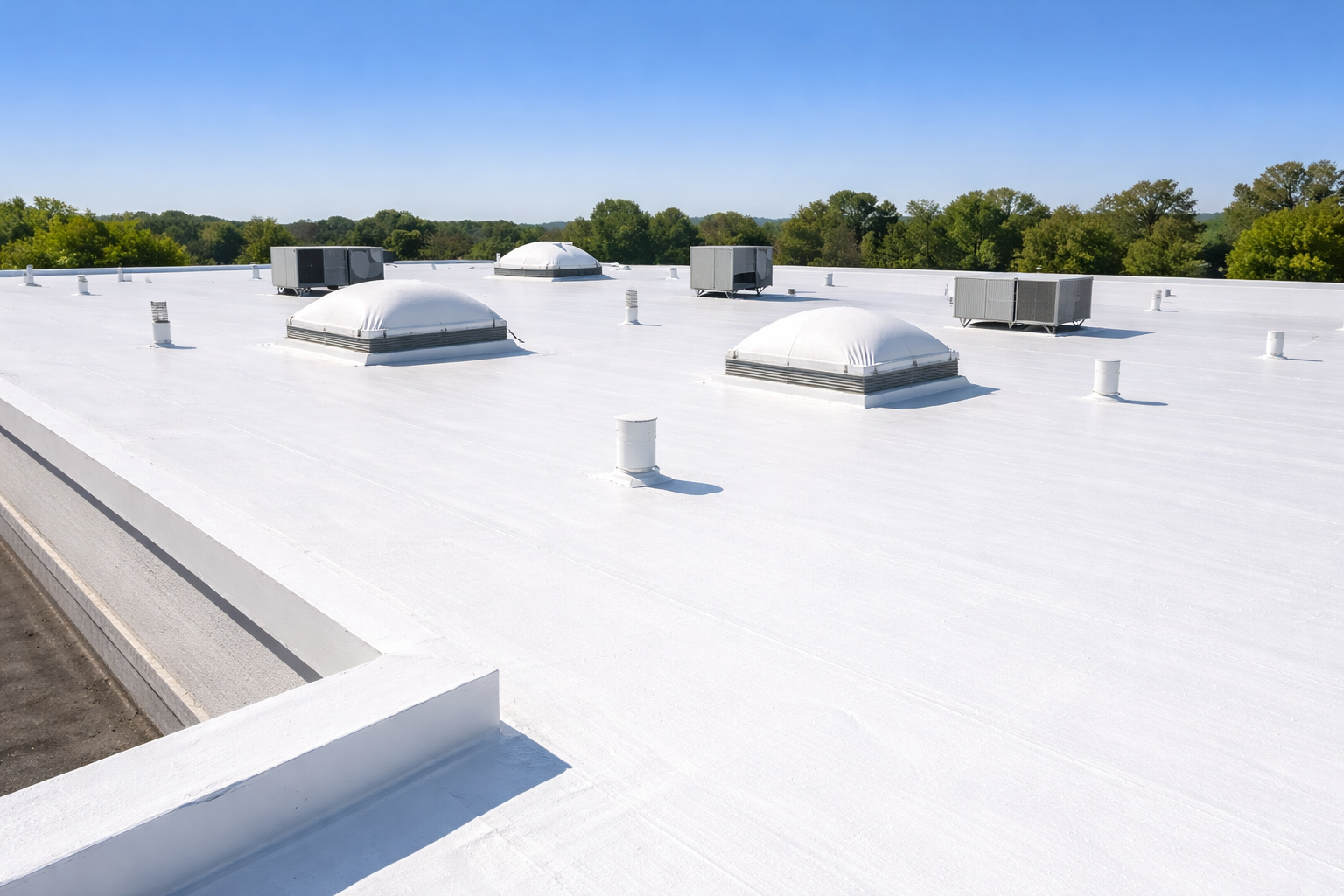
Restoration avoids this entirely. The existing roof remains in place, and the new fluid-applied membrane is installed over it in controlled sections. There is no open roof condition and far less risk of weather-related complications.
For facilities that cannot tolerate downtime, this difference alone can be decisive.
Operational Impact: Disruption vs Minimal Interruption
Replacement projects often require:
- Temporary shutdowns
- Equipment relocation
- Restricted access areas
- Increased safety coordination inside the building
Restoration projects are typically performed while buildings remain fully operational. Many owners experience little more than controlled roof access and scheduled work hours.
This makes restoration especially attractive for industrial facilities, warehouses, schools, and municipal buildings.
Timeline and Predictability
Replacement timelines are longer and more variable. Weather delays, material logistics, and unforeseen deck conditions can extend schedules.
Restoration projects tend to be more predictable. With fewer variables and no tear-off, schedules are easier to manage and adjust.
This predictability allows owners and facility managers to plan with confidence instead of reacting to surprises.
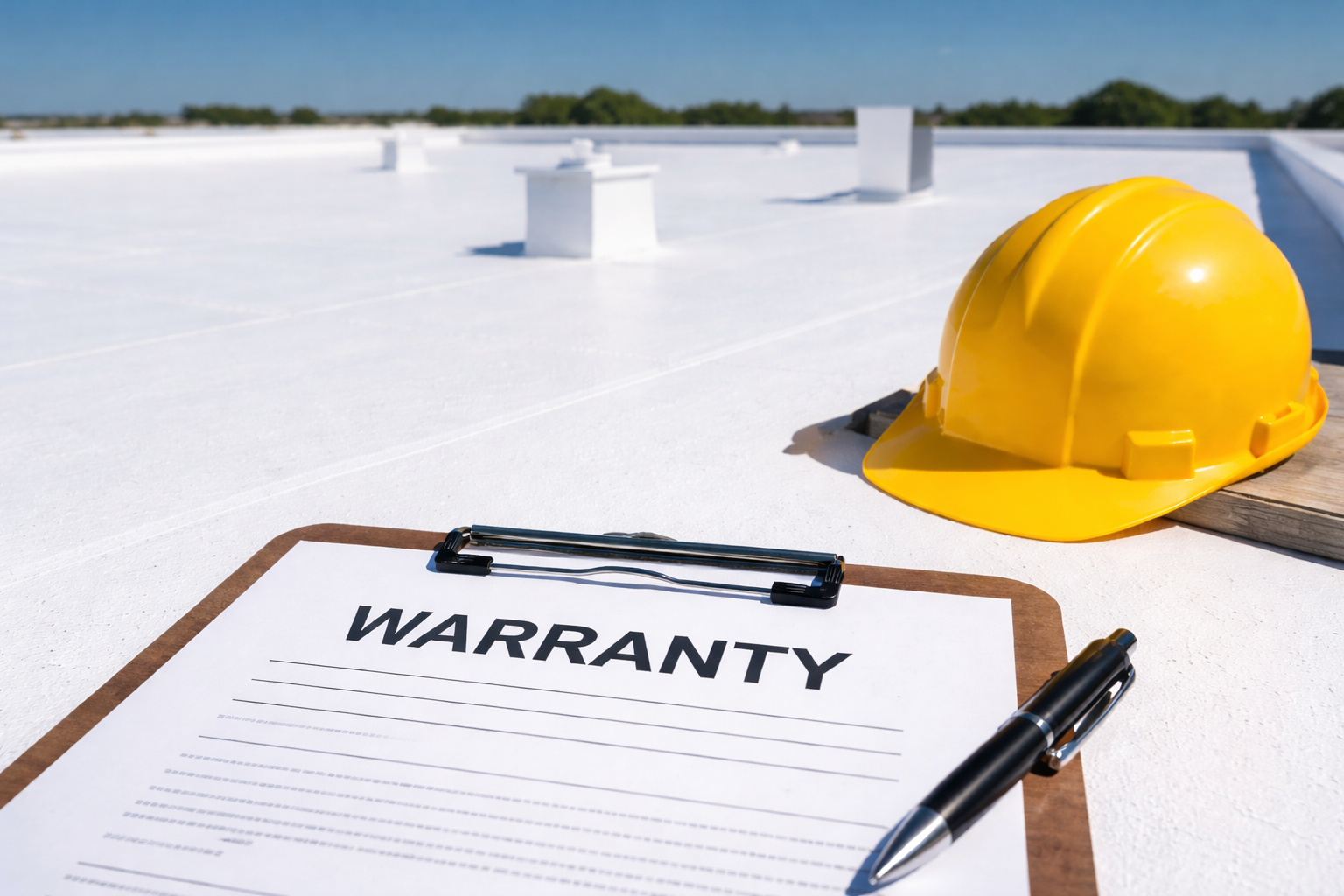
Warranty and Long-Term Planning Differences
Replacement warranties often start strong but decline over time through prorated coverage. Once the warranty expires, replacement is typically the only option presented again.
Restoration systems can include manufacturer-backed, non prorated labor and material warranties with a defined renewal path. At the end of the term, the system can often be renewed instead of replaced.
This changes roofing from a cycle of replacement to a process of asset management.
What a 15 Year Non Prorated Roof Warranty Actually Covers
Capital Planning Implications
Replacement consumes a large capital budget at once. Restoration allows owners to extend roof life at a lower cost and plan future expenditures strategically.
For many organizations, this difference determines whether roofing decisions are reactive or intentional.
Capital Planning Replacing vs Extending Roof Life
When Replacement Is Still the Right Choice
Restoration is not appropriate when:
- Structural integrity is compromised
- Saturation is widespread
- The substrate has failed
- The roof system is incompatible with restoration
In those cases, replacement is the responsible solution. The key is knowing which situation applies.
The Real Difference in Experience
Tear-off and replacement is a reset. It is disruptive, expensive, and sometimes unavoidable.
Restoration is a continuation. It stabilizes what still works, eliminates failure points, and extends service life without starting over.
Knowing the difference allows owners and facility managers to make decisions based on facts, not assumptions.