.png)

February 5, 2026
How Freeze Thaw Cycles Impact Commercial Roof Systems

In Western New York, roofing failures are rarely sudden. They’re gradual, predictable, and almost always tied to the same cause: freeze thaw cycles.
Understanding how these cycles affect commercial roof systems is critical for building owners and facility managers who want to avoid premature replacement, emergency repairs, and unplanned downtime.
What Is a Freeze Thaw Cycle?
A freeze thaw cycle occurs when moisture enters a roofing system, freezes as temperatures drop, and then expands. When temperatures rise, that moisture thaws and contracts. This process repeats dozens or even hundreds of times each year in Western New York.
The damage isn’t caused by a single freeze. It’s caused by repetition.
Why Western New York Roofs Are Especially Vulnerable
Western New York experiences frequent temperature swings around the freezing point, long winter seasons with sustained snow cover, and shoulder seasons where temperatures rise and fall daily.
These conditions create the perfect environment for moisture intrusion, especially on flat and low slope commercial roofs. This is one of the primary reasons owners are often forced to evaluate roof replacement vs roof restoration in Western New York earlier than expected.
Where Freeze Thaw Damage Starts
Most commercial roofs do not fail across the entire surface at once. They fail at details.
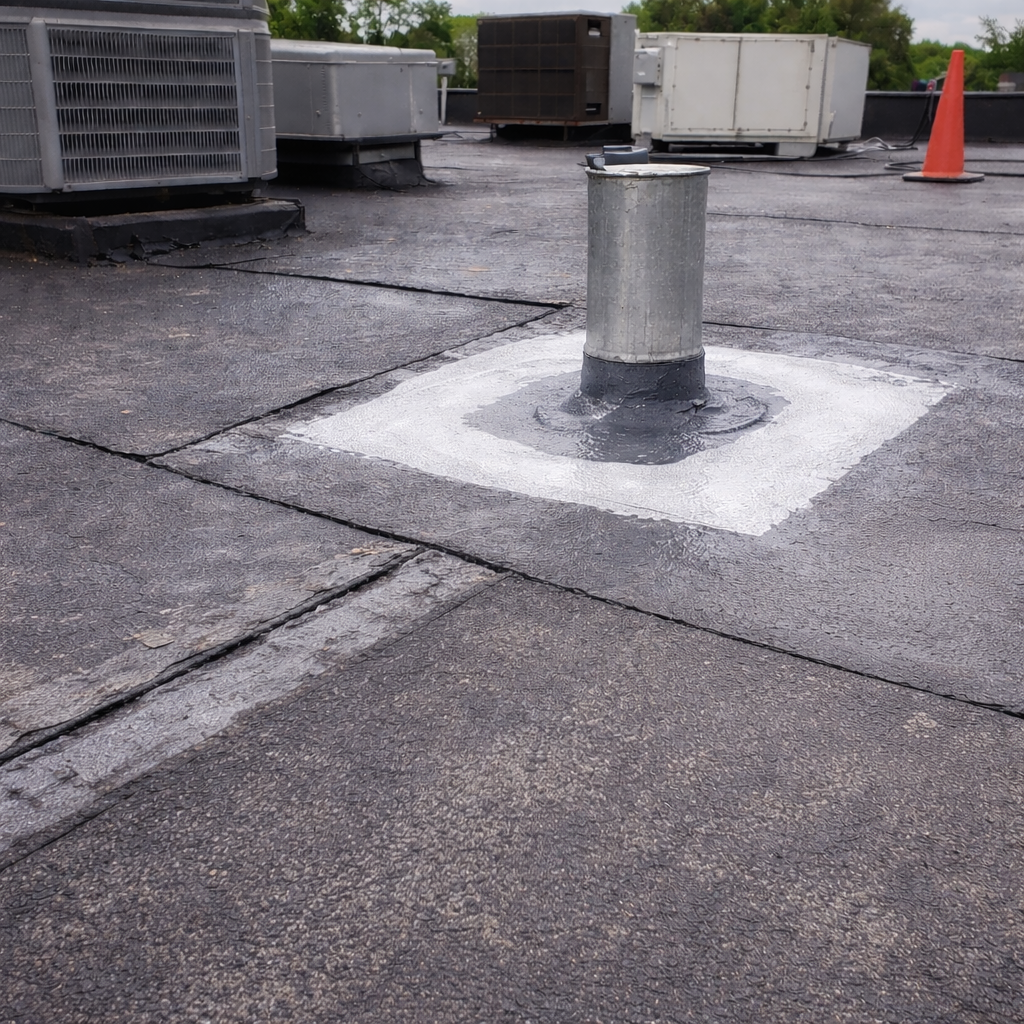
The most common failure points include seams, penetrations, flashings, transitions, drains, and low areas where water sits. Once moisture enters these areas, freeze thaw cycles accelerate deterioration.
These are the same indicators owners often see when evaluating the signs a commercial roof can be renewed instead of replaced.
How Freeze Thaw Cycles Cause Roof Failure
Expansion Creates Stress
When water freezes, it expands. That expansion places stress on seams, fasteners, and adhesives. Over time, this leads to separation, cracking, and loss of adhesion.
Thawing Allows Movement
As ice melts, roofing materials relax and shift. That movement weakens bonds and opens pathways for additional moisture to enter the system.
Repetition Accelerates Breakdown
Each cycle compounds the damage. What begins as a minor weakness becomes a recurring leak and eventually a system wide concern.
Why Seams Fail Before Membranes
In many cases, the primary roof membrane still has usable life remaining. The weak points are the seams and transitions that were never designed to flex repeatedly under freeze thaw stress.
This is why many buildings benefit from restoration rather than immediate replacement, especially when capital planning is a concern.
The Hidden Cost of Freeze Thaw Damage
Freeze thaw damage often shows up as intermittent winter leaks, emergency service calls, interior damage, and growing uncertainty about roof performance.
By the time leaks become consistent, owners are often forced into reactive decisions instead of strategic ones, which is how many buildings end up replacing roofs earlier than necessary.
Why Fluid Applied Roofing Systems Perform Better
Fluid applied membrane systems address the exact weaknesses freeze thaw cycles exploit.
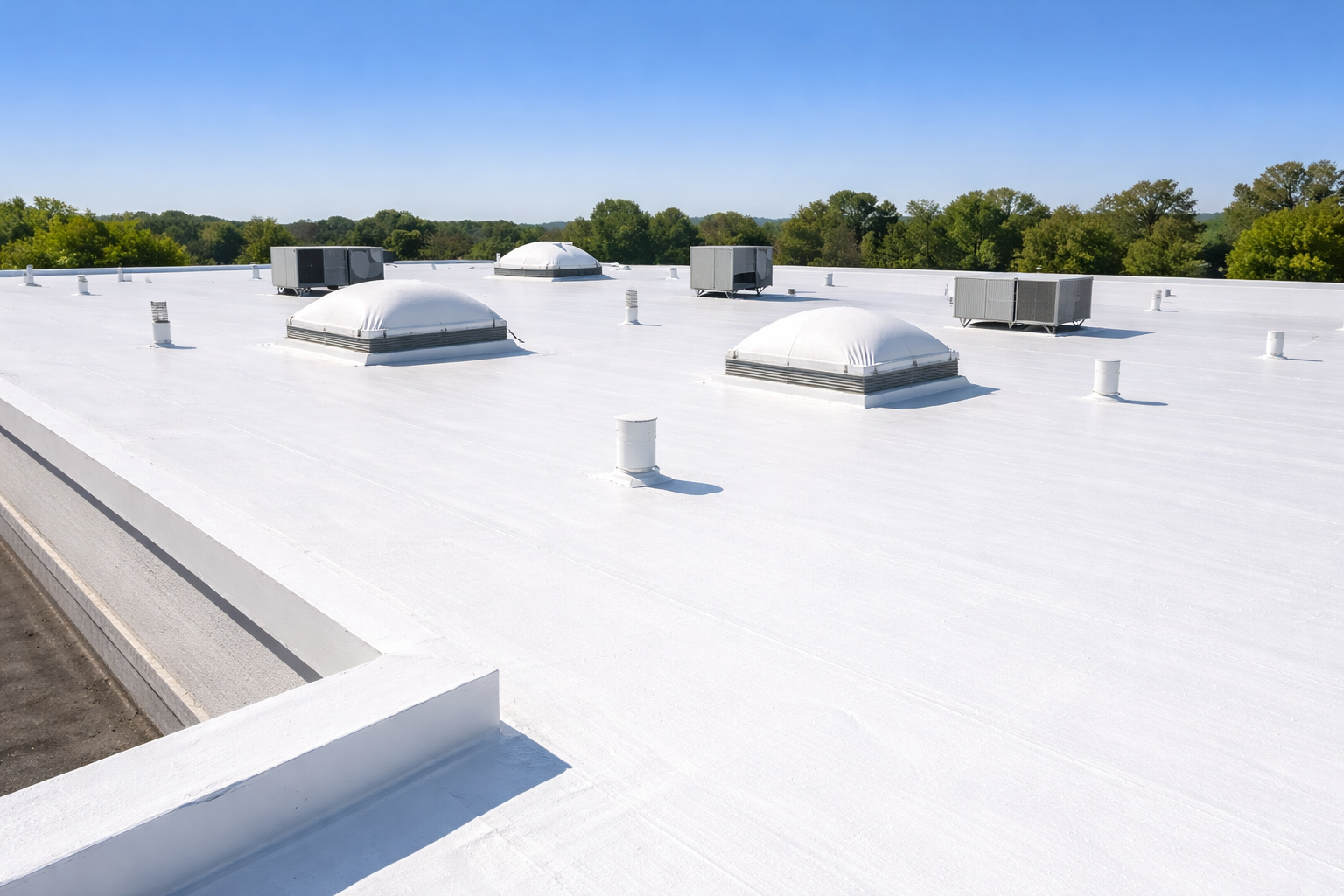
When properly designed and installed, they create a seamless waterproof surface, reinforce penetrations and transitions, eliminate laps where water enters, and remain flexible during temperature swings.
These characteristics are why fluid applied systems are often recommended during evaluations comparing roof replacement vs roof restoration for aging commercial roofs.
Reflective Surfaces and Temperature Stability
Many fluid applied systems also include reflective surfaces that help reduce surface temperature swings, minimize thermal shock, and slow expansion and contraction cycles.
This added stability reduces stress on the roof system and can contribute to improved energy performance over time.
Freeze Thaw Does Not Automatically Mean Replacement
One of the most common misconceptions is that visible freeze thaw damage means the roof has reached the end of its life.
In reality, many roofs affected by freeze thaw cycles are still structurally sound. The failures are often localized, not systemic. When addressed early, restoration can reset the roof lifecycle without tear off.
Understanding this distinction is central to making informed decisions about replacing versus extending roof life.
Why Assessment Comes First
Before recommending any solution, a proper roof assessment should evaluate moisture presence, substrate condition, seam integrity, drainage performance, and detail failures.
This approach ensures owners do not invest in short term fixes or unnecessary replacement when a system based solution may be more appropriate.
Long Term Thinking Beats Reactive Repairs
Patchwork repairs may temporarily stop leaks, but they do nothing to address the underlying vulnerabilities caused by freeze thaw cycles.
System based restoration focuses on eliminating water entry points, reinforcing weak areas, creating continuous protection, and extending service life intentionally. That difference is what separates asset management from crisis response.
Freeze thaw cycles are unavoidable in Western New York. Roof failure does not have to be.
By understanding how these cycles impact commercial roof systems, owners and facility managers can make proactive decisions, control costs, and avoid unnecessary replacement.
If your roof is showing signs of freeze thaw damage, the next step should not be guessing. It should be assessment.